Whether you’re building a platform to compare hotel prices, book flights, or rent cars, leveraging the right travel API integration can dramatically enhance your application’s functionality and user experience. At FlightAPI, we provide flight data APIs and work closely with travel businesses, so we understand what different models actually need. We’ve tested multiple travel APIs across flights, hotels, car rentals, pricing, content, and real-time status to see what performs best in real scenarios. Based on that experience, we’ve put together a clear comparison list. Check the table below to quickly find the API that fits your use case and choose accordingly. Provider Category What It Offers Best For Key Limitation FlightAPI Flights (Prices, Status, Schedule) Global rental cars, transfers, and insurance Travel startups, dashboards, price comparison tools No ticket booking PHPTRAVELS All-in-One (Flights, Hotels, Cars, Tours) Full travel tech stack with booking flow OTAs, B2B/B2C portals Can be costly for small agencies Amadeus API Flights + Hotels Fare search, booking, price analytics, delay prediction Large travel apps & enterprises Expensive, limited fare access Skyscanner API Flight Search Low-cost flight search & route comparison Budget fare comparison apps Limited country availability FlightAware Aero API Flight Status & Tracking Real-time & historical flight tracking data Tracking apps, aviation tools Data accuracy may vary TripAdvisor API Reviews + Hotel Availability Airline reviews & hotel room availability Travel content & recommendation apps Data availability varies Travelfusion API Flight Aggregator Direct airline connections, NDC support Platforms needing live airline pricing Price changes during checkout MakCorps API Hotel Price Comparison Real-time & historical hotel prices (200+ OTAs) Price intelligence, hotel analytics No booking support Hotelapi.co Hotel Price Data Real-time OTA hotel rates Data-driven pricing tools No booking integration Booking.com API Hotel Booking Room availability, pricing, booking management Hotel booking portals API usage fees Hotelbeds API Hotel Booking + Content Booking + rich hotel content data Travel agencies & tech startups Integration requires expertise Cloudbeds API Hospitality Management Reservation, guest data, reporting API Hotels & property managers Rate limits GetYourGuide API Tours & Activities Real-time experience inventory Experience platforms API complexity CarTrawler API Car Rentals Fare search, booking, price analytics, and delay prediction Airlines & OTAs Workflow complexity in some regions 1. Flight API (Prices, Status, and Schedule Data) FlightAPI is an efficient Flight API Provider that allows travel companies to retrieve flight information, such as prices, status, and schedules from multiple airlines, and display this flight data on their own website. While FlightAPI is headquartered in India, it competes with every major provider in the USA by offering reliable and cost-effective solutions globally. By integrating this, travel companies can automate the process of retrieving flight data, which reduces manual effort and increases efficiency to a whole new level. Here are the different APIs that FlightAPI offers to cater to all your flight-related needs: If you can’t decide whether FlightAPI is the right fit for the service & customer experience you’re looking for. We have listed the pros & cons to make the decision easier for you. Pros: It provides real-time data, which helps travel companies offer up-to-date information to their customers. Cons: Doesn’t facilitate booking, but works best for those looking for fast, accurate, and real-time flight-related data. Whether you’re a developer or prefer no-code tools, FlightAPI offers detailed tutorials to help you get started with data retrieval. Explore the guides below: 2. PHPTRAVELS (One Stop Solution) PHPTRAVELS offers a comprehensive travel-technology stack with integrated API solutions for flights, hotels, cars, tours, and more. Their API supports both JSON and XML formats, is aimed at OTAs, agencies, and B2B/B2C portals, and enables full booking flows: search → price/revalidate → book → issue/ticket. They also emphasise global reach (500+ airlines, 200,000+ hotel properties) and enterprise-grade features such as markups/commissions, corporate modules, sandbox credentials, and strong documentation. Pros: It offers a complete travel solution with APIs for flights, hotels, tours, and cars, and helps agencies manage everything in one place. Cons: Requires onboarding to access all advanced features and can be costly for smaller travel businesses. 3. Amadeus API for Travel (Flights and Hotels) Amadeus API is one of the most popular travel self-service APIs that meet the needs of startups, travel businesses, and enterprises that focus on mature businesses building large travel applications. This Self-Service API is a powerful tool that helps businesses find and compare flight locations and fares easily. You can easily keep track of the lowest fares, most booked destinations, and much more. Furthermore, it is also a useful application for booking flights, analyzing flight prices, predicting arrival and departure delays, and much more. The Enterprise Service API subscription includes nearly 200 API collections, including new REST APIs from the Self-Service API suite and older SOAP APIs that rely on the XML data format and provide broader functionality. In addition to flights, Amadeus also offers a Hotel API that lets developers search, compare, and book accommodations across a wide inventory of properties worldwide. To get a clear understanding of this popular API, check out the pros and cons of using it. Pros: Through the portal, developers can take advantage of Amadeus APIs alongside the tools, resources, and support they need to build and launch their applications quickly. Cons: Ticketing can only be done through consolidators, and you don’t get access to negotiated or corporate fares. Plus, Amadeus APIs are highly expensive and not easily accessible for most travel businesses. 4. Skyscanner Flight Search API Skyscanner is one of the most renowned API Software that provides flight API solutions that help customers save the day when it comes to searching for budgeted and discounted flight fares. It lets you search for flights with the lowest prices on given dates with the cheapest routes as per the search query. Pros: It’s easy to integrate and is available in SON, XML, JSONP response format, and URI Query String/CRUD request format, and programming languages. Cons: The API is currently available in a limited number of countries and regions. 5. Flight Aware Aero API (Status and Tracking)
Whether you’re building a platform to compare hotel prices, book flights, or rent cars, leveraging the right travel API integration can dramatically enhance your application’s functionality and user experience.
At FlightAPI, we provide flight data APIs and work closely with travel businesses, so we understand what different models actually need. We’ve tested multiple travel APIs across flights, hotels, car rentals, pricing, content, and real-time status to see what performs best in real scenarios.
Based on that experience, we’ve put together a clear comparison list. Check the table below to quickly find the API that fits your use case and choose accordingly.
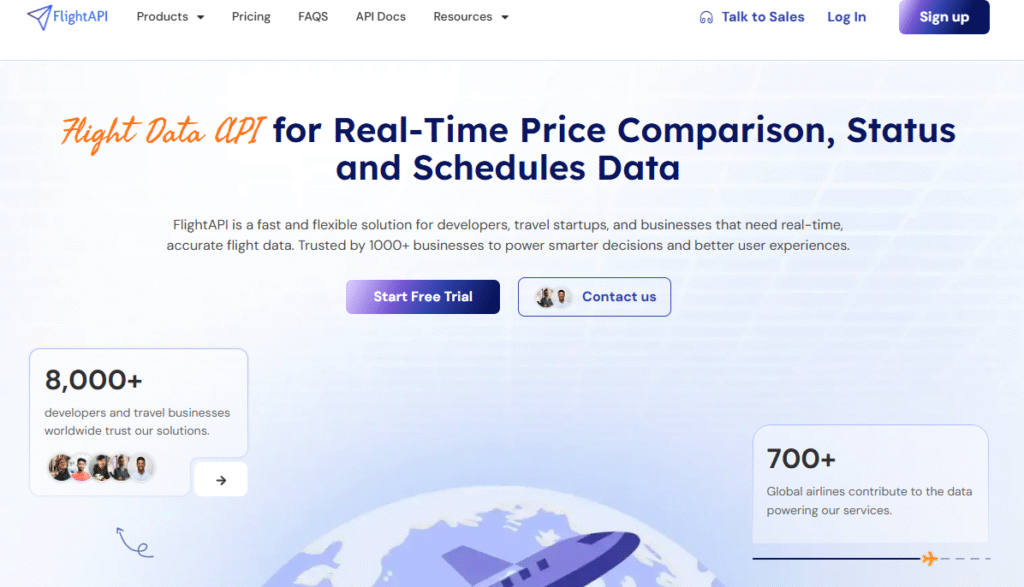
FlightAPI is an efficient Flight API Provider that allows travel companies to retrieve flight information, such as prices, status, and schedules from multiple airlines, and display this flight data on their own website.
While FlightAPI is headquartered in India, it competes with every major provider in the USA by offering reliable and cost-effective solutions globally.
By integrating this, travel companies can automate the process of retrieving flight data, which reduces manual effort and increases efficiency to a whole new level.
Here are the different APIs that FlightAPI offers to cater to all your flight-related needs:
If you can’t decide whether FlightAPI is the right fit for the service & customer experience you’re looking for. We have listed the pros & cons to make the decision easier for you.
Pros: It provides real-time data, which helps travel companies offer up-to-date information to their customers.
Cons: Doesn’t facilitate booking, but works best for those looking for fast, accurate, and real-time flight-related data.
Whether you’re a developer or prefer no-code tools, FlightAPI offers detailed tutorials to help you get started with data retrieval.
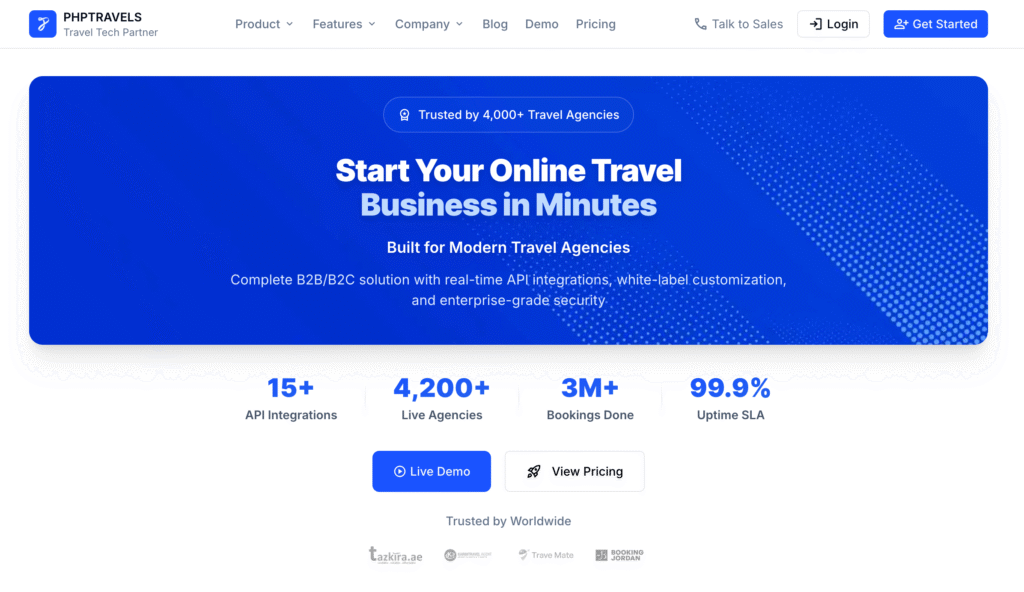
PHPTRAVELS offers a comprehensive travel-technology stack with integrated API solutions for flights, hotels, cars, tours, and more. Their API supports both JSON and XML formats, is aimed at OTAs, agencies, and B2B/B2C portals, and enables full booking flows: search → price/revalidate → book → issue/ticket.
They also emphasise global reach (500+ airlines, 200,000+ hotel properties) and enterprise-grade features such as markups/commissions, corporate modules, sandbox credentials, and strong documentation.
Pros: It offers a complete travel solution with APIs for flights, hotels, tours, and cars, and helps agencies manage everything in one place.
Cons: Requires onboarding to access all advanced features and can be costly for smaller travel businesses.
3. Amadeus API for Travel (Flights and Hotels)
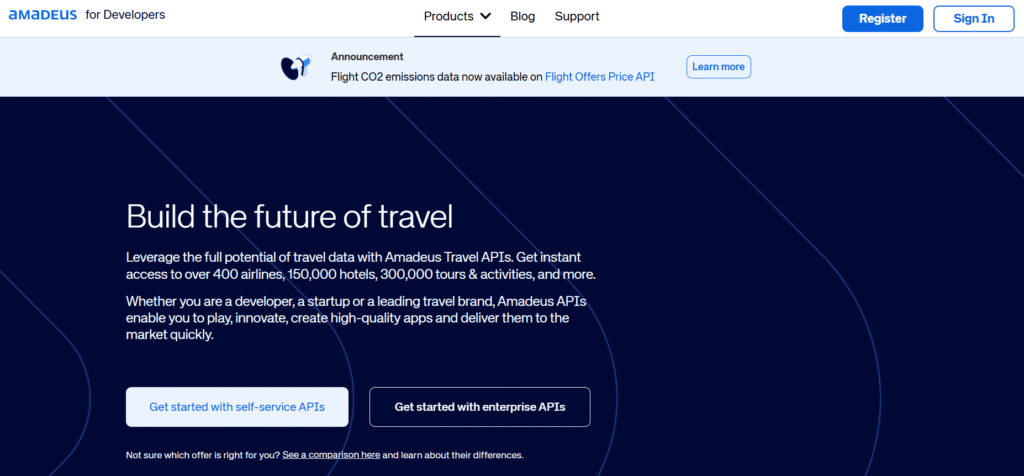
Amadeus API is one of the most popular travel self-service APIs that meet the needs of startups, travel businesses, and enterprises that focus on mature businesses building large travel applications.
This Self-Service API is a powerful tool that helps businesses find and compare flight locations and fares easily.
You can easily keep track of the lowest fares, most booked destinations, and much more.
Furthermore, it is also a useful application for booking flights, analyzing flight prices, predicting arrival and departure delays, and much more.
The Enterprise Service API subscription includes nearly 200 API collections, including new REST APIs from the Self-Service API suite and older SOAP APIs that rely on the XML data format and provide broader functionality.
In addition to flights, Amadeus also offers a Hotel API that lets developers search, compare, and book accommodations across a wide inventory of properties worldwide.
To get a clear understanding of this popular API, check out the pros and cons of using it.
Pros: Through the portal, developers can take advantage of Amadeus APIs alongside the tools, resources, and support they need to build and launch their applications quickly.
Cons: Ticketing can only be done through consolidators, and you don’t get access to negotiated or corporate fares. Plus, Amadeus APIs are highly expensive and not easily accessible for most travel businesses.
4. Skyscanner Flight Search API
Skyscanner is one of the most renowned API Software that provides flight API solutions that help customers save the day when it comes to searching for budgeted and discounted flight fares.
It lets you search for flights with the lowest prices on given dates with the cheapest routes as per the search query.
Pros: It’s easy to integrate and is available in SON, XML, JSONP response format, and URI Query String/CRUD request format, and programming languages.
Cons: The API is currently available in a limited number of countries and regions.
5. Flight Aware Aero API (Status and Tracking)
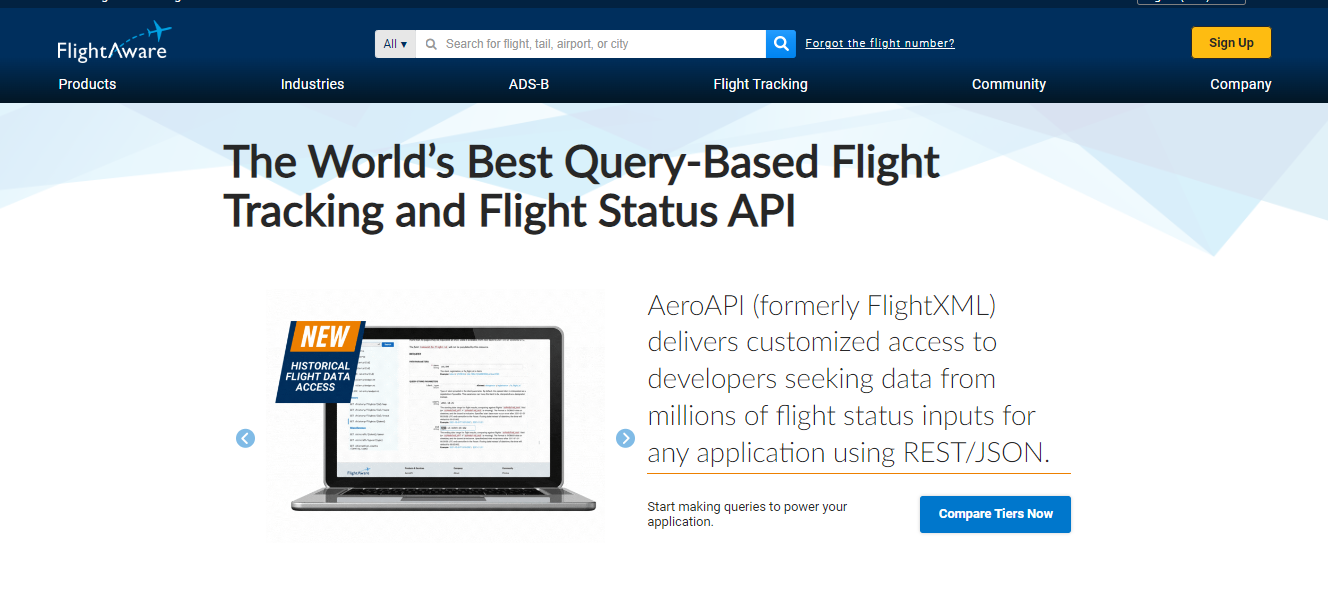
The Aero API is an application that delivers customized access to developers seeking data from millions of flight status inputs for any application using REST/JSON.
It is an easy-to-integrate, flexible, and scalable tool that provides both current and historical flight data.
Users can easily retrieve flight data through AeroAPI, including flight tail number, aircraft type, origin and destination of the airport, time the last position was received, and much more.
Flight Aware Aero APIs have a lot of features to offer. If you are considering integrating these APIs into your application, a mobile app development team can assist in ensuring a smooth and efficient implementation.
Pros: Provides a quick and easy way to find information about airports and flights.
Cons: The accuracy of the data provided through the Aero API can be a concern, as the data is subject to change and may not always be up-to-date.
6. TripAdvisor (Airline Review & Hotel Room Availability)
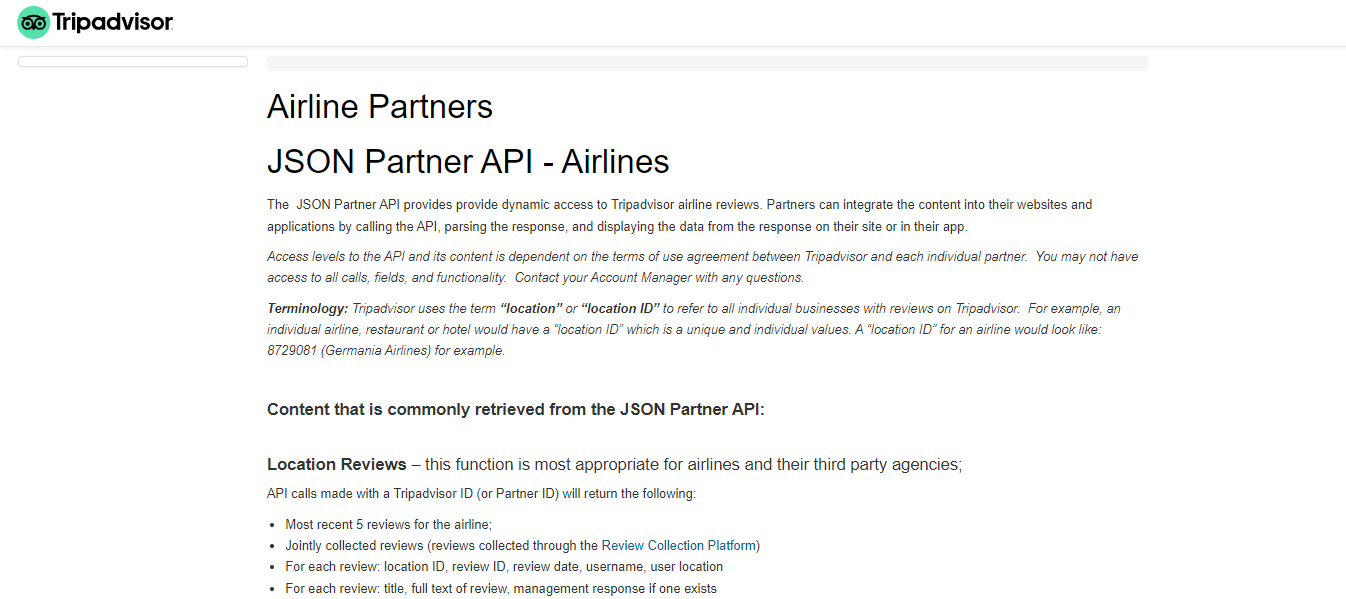
TripAdvisor is an Airline Review API Provider that continues to maintain its presence as the world’s leading travel platform that helps multiple travelers plan their best trip across the globe.
One can browse millions of customer reviews and experiences on different airlines and cruises on its platform.
Despite that, TripAdvisor also offers a hotel room availability API, which helps customers find room availability in their desired tourist destination.
Pros: The API provides personalized travel recommendations based on user preferences and history.
Cons: The availability of data depends on various factors such as real-time updates, reliable sources, fluctuating prices, and changing market demands.
7. Travelfusion API (Prices and Routes)
Travelfusion Flight API is a global flight and accommodation aggregator that connects with hundreds of low-cost airlines and scheduled carriers worldwide. It has become well known for pioneering Direct Connect technology, which links travel platforms directly to airline systems.
It offers:
Direct Connect XML API – Real-time availability with a fully automated booking process, cutting out intermediaries.
Fast API – A lightweight REST-based API designed for rapid integration and faster response times.
Multi-Inventory Dashboard (MI Dashboard) – Provides booking analytics, error tracking, response times, and load-to-booking ratios to optimize performance.
NDC Support – Travelfusion is an IATA-certified NDC aggregator, giving businesses access to richer airline content, ancillary services, and bundled offers.
Pros: Supports comprehensive flight search with multiple filters (routes, dates, airlines, fare types) while delivering direct connections for accurate pricing and live availability. It also facilitates ancillary services such as baggage and seat selection through NDC.
Cons – Live airline data can change rapidly, meaning prices or availability shown during search may occasionally differ at checkout.
8. MakCorps (Hotel Price Comparison)
MakCorps Hotel Price Comparison API is a game-changer in the travel industry. With a single GET request, it allows you to access hotel price comparison data from over 200 Online Travel Agencies (OTAs). So, from now on, no more tedious & time-consuming manual searches. Because MakCorps Hotel API is here to simplify and accelerate the process.
Plus, this API not only offers real-time pricing but also provides historical data to help online travel agencies, hotel chains, and other businesses that require hotel price comparison data to make informed decisions.
Pros: Easy documentation and access to real-time and historical pricing data.
Cons: Doesn’t offer hotel booking.
9. Hotelapi.co (Hotel Price Comparison)
Hotel.co offers a potent Hotel Price API, which provides real-time rates from all major online travel agencies in one simple GET request. This API empowers your business with data-driven decisions, effortless integration, and accurate pricing data.
In addition to that, it also provides transparent pricing options that cater to business with all sizes and budgets.
Pros: Delivers real-time rates from major OTA platforms with one GET request, which enables data-driven decisions and easy integration.
Cons: Doesn’t support hotel booking integration.
10. Booking.com (Hotel Booking)
Booking.com is a useful API for travel businesses, hospitality tech companies, and developers that allows them to gain insights on room availability, prices, facilities, policies, and other hotel data to use in other functions.
It can help your website or app to get enriched with important information it needs to provide your customer’s accurate and real-time info.
If you’re looking for the best API for a travel website to book hotels directly, this hotel booking API can be integrated into your portal.
However, you still need to check out the pros & cons.
Pros: It offers the ability to make bookings for hotels and accommodations, including the ability to retrieve, create, and modify bookings.
Cons: Using the Booking.com API may incur fees, which can be a high cost for developers and businesses.
11. Hotelbeds API (Hotel Booking)
Hotelbeds launched their Booking API to simplify integrating hotel reservations into any website or app. Partners can tap into real-time access to Hotelbeds ‘ huge collection of accommodations around the globe. This makes it smooth for users to search options, confirm bookings, manage reservations, and more.
Getting set up is straightforward – just register for a free travel API for developers, fill out your profile so Hotelbeds can tailor it to your business needs, get certified with some one-on-one support from their API experts, and then go live to start facilitating actual bookings.
Apart from the Booking API, Hotelbeds also provides the Hotel Content API, packed with descriptive details, photos, amenities, and other rich information on hotels.
Together, these APIs are designed to empower travel agencies, tour companies, and travel tech startups to offer their customers a comprehensive selection of places to stay.
Pros: Offers real-time access to a vast global accommodation inventory.
Cons: The integration process may require technical expertise.
12. Cloud Beds API (Hospitality & Distribution Management )
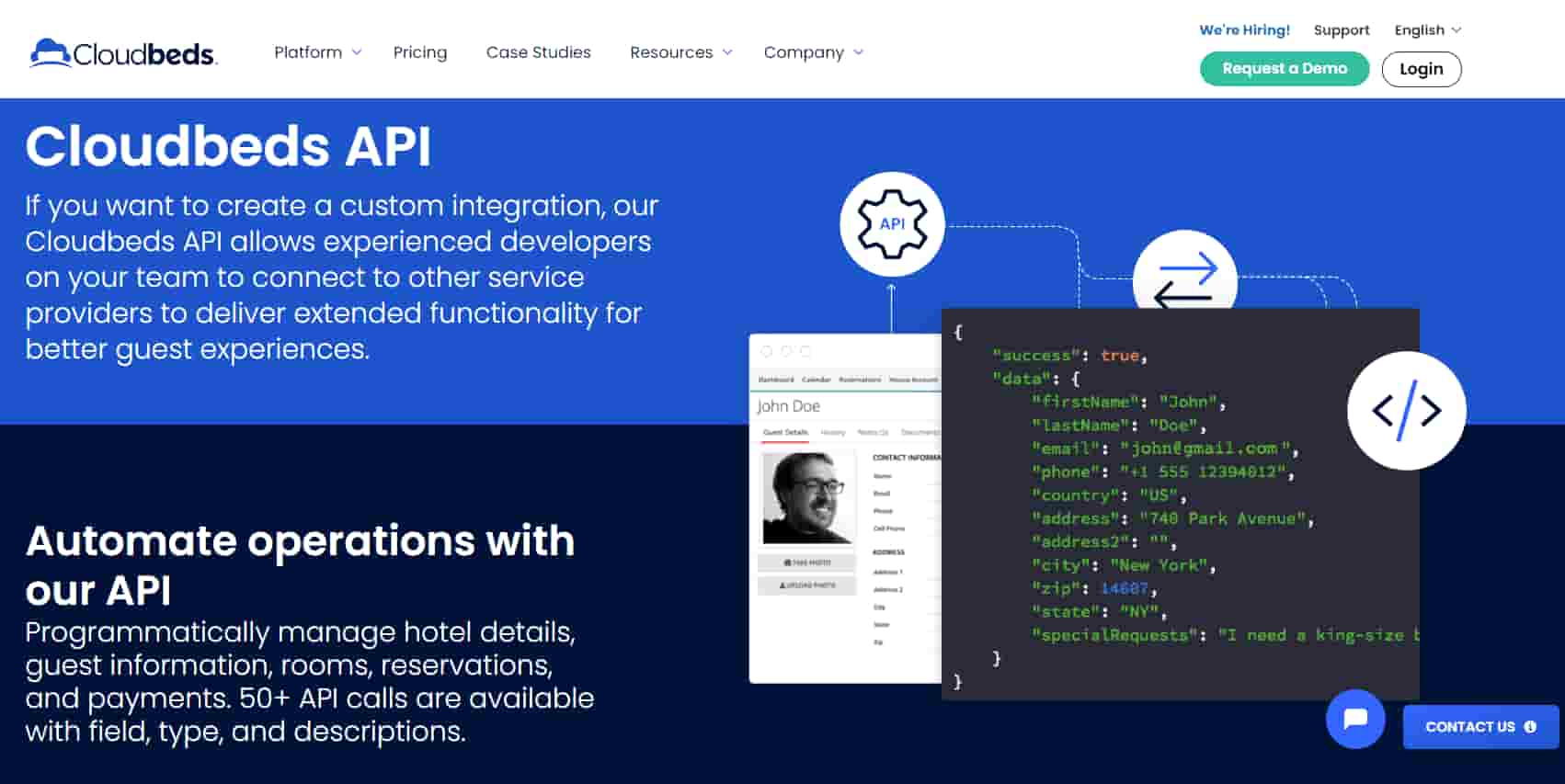
Cloudbeds is a leading hospitality software provider that offers a robust API (Version 1.1) designed to streamline hotel operations.
It serves 157 countries and is integrated with over 600 partners. Cloudbed’s API showcases the company’s global reach and reliability, which makes it an invaluable resource for tech partners and property managers striving to achieve operational excellence and exceptional guest satisfaction.
This powerful API serves as a bridge that grants access to critical guest data, reservations, and other essential information. It supports standard HTTP methods like GET, POST, and PUT to deliver responses in JSON format over secure HTTPS connections.
This API is tailored for developers and hoteliers seeking to enhance customer experiences. The Cloudbeds API offers comprehensive documentation on available methods, parameters, and response examples.
It incorporates rate limits to maintain optimal performance during high-demand periods and includes a dedicated Reporting API for accessing valuable insights.
A standout feature is its adjustment management functionality that enables users to easily manage reservations by adding, deleting, and retrieving adjustments.
In addition to distribution and reservation management, many hotels integrate Cloudbeds with hotel front desk software to streamline daily operations like check-ins, check-outs, and guest communication.
Pros: Global reach and secure access to hotel data.
Cons: Rate limits may affect high-demand access.
13. Get Your Guide API (Experiences & Activities Booking)
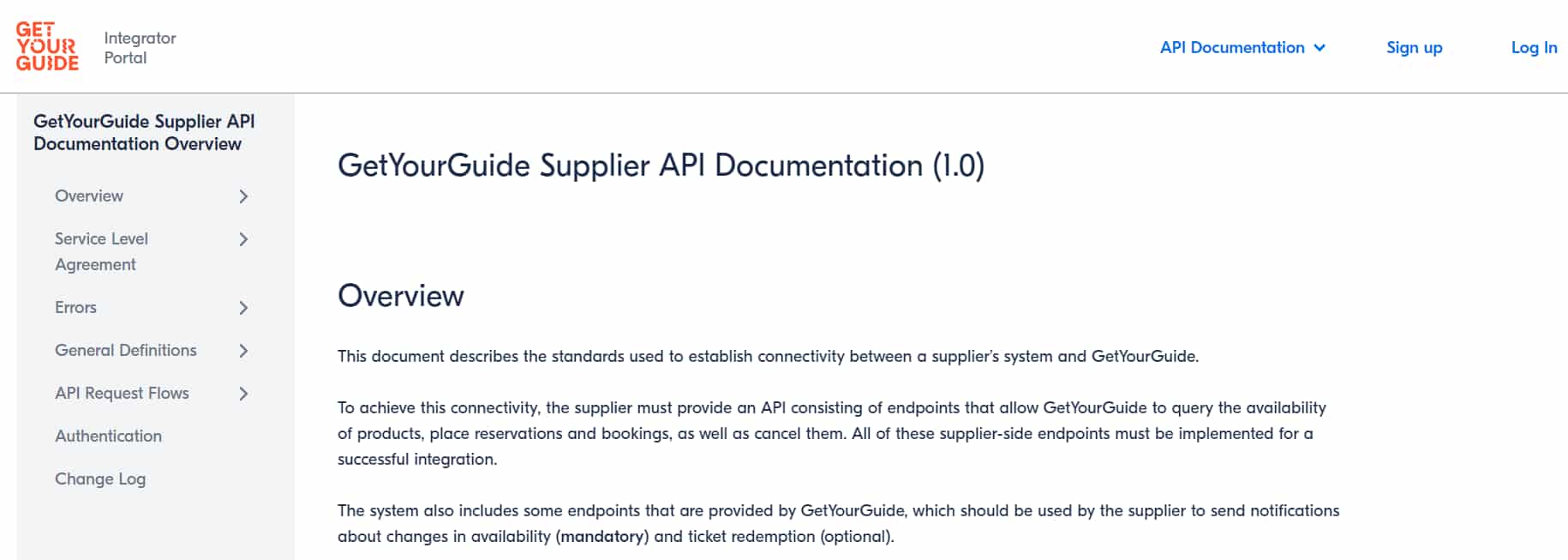
Founded in 2009, Get Your Guide is not just a website for searching excursions, activities, and tourist attractions. It also helps partners integrate tours, activities, and attractions into their platforms.
Specifically, Get Your Guide offers an API that provides partners with access to its extensive inventory of bookable experiences around the world.
This includes real-time availability, pricing details, and booking cancellation that partners can directly incorporate into their sites and apps. The aim is to empower travel companies to enhance their offerings and customer experience.
Pros: Vast global inventory of experiences with real-time availability and booking.
Cons: API complexity for customized user experiences can be challenging.
14. CarTrawler (Car Rental)
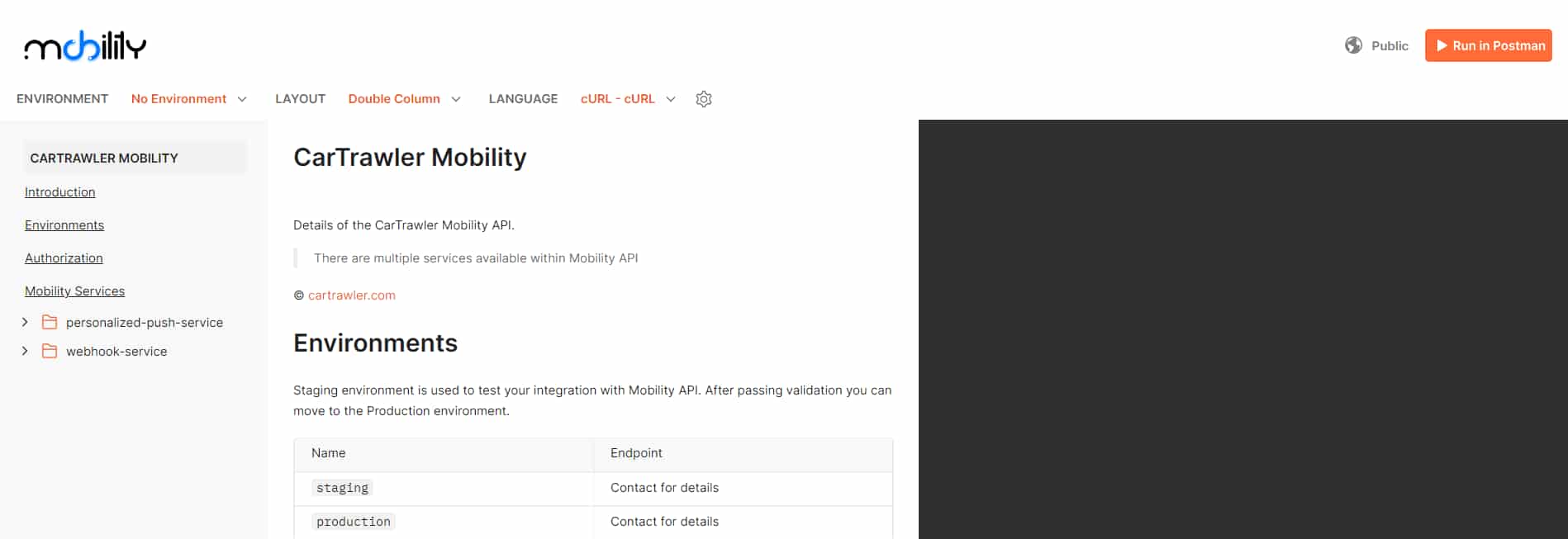
CarTrawler is a leading B2B travel technology platform headquartered in Dublin, Ireland, offering ground transportation solutions to airlines, OTAs, and travel brands. As of 2026, it works with over 2,200 vehicle rental providers across 150 countries and 50,000+ locations, which makes it one of the largest networks of its kind.
CarTraveler API offers:
Extensive supplier and location coverage – Thousands of car rental brands and mobility partners with global reach.
CarTrawler Connect Platform – Enables partners to integrate rental cars, private transfers, and taxis into their platforms with dynamic pricing and cross-selling tools.
Advanced revenue management & analytics – A data science–driven system optimizes pricing and personalization, with high API reliability.
Expanded offerings – Recent moves into insurtech allow partners to embed innovative travel insurance products, such as “Cancel for Any Reason,” directly into booking flows.
Pros Unmatched global ground mobility coverage and scalability, ideal for platforms aiming to provide seamless end-to-end transportation options.
Cons While powerful, partners occasionally report challenges with booking workflows or customer support in certain regions.
There’s no such thing as a completely free travel API. However, if you only need to make a few API calls for a product or assignment, FlightAPI has got you covered. Simply sign up for the free trial and get 50 API calls on your first registration. Give it a try!
Travel API SDKs are tools provided by API developers that simplify the integration of travel APIs into applications. They include pre-written code, libraries, and documentation that help developers to quickly add travel features like flight booking, hotel reservations, and car rentals to their apps.
If you’re looking for a Flight and Hotel API for real-time pricing or flight status, which often gets change and are critical to be used in real time. Makcorps and FlightAPI is best one you can try.
Check which API has clear documentation and an easy integration process. Large companies often provide limited support and can be hard to reach (though not always). Smaller providers usually focus more on customer retention, offer faster support, and may even proactively help resolve issues.
When selecting travel services, consider FlightAPI for high uptime and fast flight data. For stable hotel price comparisons, MakCorps is a great option. If you need a reliable enterprise travel stack, Amadeus is suitable, though it can be heavier. Testing each can help you find the best fit for your needs.
Neha Jangid is an SEO and content specialist at FlightAPI, crafting tutorials and content that simplify flight data for users. She blends SEO strategy with clear communication to boost visibility and user engagement.
Related Blogs
Read more articles to stay informed and explore related topics.
If you’re developing a travel application, managing logistics, or integrating flight data into your business systems, accessing accurate flight location...
If you’re managing travel logistics, coordinating shipments, running a travel agency, or overseeing business operations where tracking flights between airports...