Top 5 Airport Schedule APIs in 2025

Top 5 Airport Schedule APIs in 2025

Looking for an airport schedule API that provides you the accurate data? That’s where things get tricky.  A good airport schedule API gives you what you’d expect: flight numbers, airline names, arrival and departure times, and current status like “scheduled” or “delayed.” But some go further, including gate and terminal info, aircraft model codes, airport coordinates, timezone data, and even links to public sources like Wikipedia or airport images – all in one structured response. If you’re working with arrivals or departures and need more than just a timestamp and a flight number, these advanced APIs are worth a closer look. To make your search easier, we’ve listed the Top 5 Airport Schedule APIs in 2025, based on accuracy, data depth, and ease of use. Here’s what stands out. API Provider Description Pros Cons Pricing FlightAPI Provides real-time arrival and departure data with airport metadata like coordinates, terminals, timezone, and Wikipedia links. Ideal for travel platforms needing accurate airport data. • Reliable real-time updates• Covers 700+ airlines• No-code integrations available • No booking features• Credit-based pricing may rise with usage Lite – $49/moStandard – $99/moPlus – $199/moFree trial – 20 calls Aviyair Offers live airport timetables with over 20 filters (status, gate, terminal, airline). Designed for aviation software needing granular flight data. • Real-time schedule data• Multi-language SDKs• Broad API suite (7+ types) • Expensive entry point• No free trial Starter – $129/moStandard – $269/moBusiness – $729/moCustom – Contact sales GoFlightLabs Delivers real-time and historical flight schedules, including terminals, gates, and delay info. Suited for developers building dashboards or trackers. • Budget-friendly plans• Global flight data• Historical and future schedules • Strict rate limits• Billing and support issues reported Starter – $24.99/moBasic – $49.99/moPro – $149.99/moPremium – $249.99/moFree trial – 7 days SITA Enterprise-grade API used by airlines and airports to access global schedules and frequency data. Focuses on accuracy and operational planning. • Trusted by global carriers• Detailed metadata (gates, aircraft, frequency)• High reliability • No public pricing• Requires enterprise setup Enterprise-only – Contact sales AviationStack Provides both real-time and historical flight data for airports worldwide. Easy to integrate for flight boards, analytics, and travel apps. • Free tier for testing• High accuracy• 99.9% uptime • Rate limits on core APIs• Occasional duplicate data Free – 100 calls/moBasic – $49.99/moPro – $99.99/moBusiness – $249.99/moEnterprise – Custom 1. FlightAPI The Airport Schedule API from FlightAPI offers structured access to flight schedules for any airport, with support for both arrivals and departures. It pulls flight data from the last two days to three days ahead, or up to a 10-day window if no specific date is passed. The data includes flight numbers, status, departure and arrival times, airline info, and even aircraft codes. Each response also provides detailed airport metadata like IATA and ICAO codes, location coordinates, timezone info, elevation, and optional links to Wikipedia and image sources. It’s useful if you’re adding contextual or location-based elements. To fetch data, you only need a few required parameters: your API key, the airport’s IATA code, and the mode (arrivals or departures). There’s also an optional day parameter to customize your date range. Documentation: Airport Schedule API Docs If you’re a no-code developer or prefer working with spreadsheets, you can also use the API directly inside Google Sheets. Check out this quick walkthrough 👉 Get Airport Schedule Using Google Sheets and API Other APIs FlightAPI offers: Pricing: Pros: Cons: 2. Aviyair Aviyair’s Current Airport Schedules API provides real-time access to live airport timetable data. With just two required fields. The airport IATA code and schedule type (arrival or departure). You can pull live schedule updates directly into your application or system. The API supports over 20 optional filters to narrow results, including airline, terminal, gate, status, flight number, delay duration, and more. It returns all key timetable data like scheduled, estimated and actual times, terminal/gate info, airport IATA/ICAO codes, airline identifiers, flight status, and codeshare details when available. Developers can also combine this with Aviyair’s future schedules API to enrich responses with common aircraft model data per flight number. The JSON REST structure is designed to work across modern languages, including JavaScript, Python, PHP, and others. Pricing: Pros: Cons: 3. GoFlightLabs GoFlightLabs provides an airport schedule API that returns real-time departure and arrival data based on the airport’s IATA code. You can set the schedule type as either departure or arrival, and add filters like airline, flight number, or timestamps to narrow things down. Each response includes the essentials such as flight number, airline codes, terminals, gates, scheduled times, and current status. You also get timestamps for estimated and actual events, delay durations, and aircraft ICAO codes. Baggage carousel info and codeshare identifiers show up when available. The API is delivered in JSON format and includes both local and UTC timestamps for time-based tracking. Pricing: Pros: Cons: 4. SITA SITA offers a Flight Schedule API built for global aviation data needs, providing access to scheduled flights between airports, including future flight details. The API is designed to work with both city and airport codes (IATA), making it flexible for a variety of schedule-based applications. The output typically includes flight numbers, airline details, departure and arrival airports, scheduled times, and frequency of service. It’s suitable for displaying available flight connections, planning logistics, or integrating schedule insights into aviation platforms. This API focuses on scheduled data rather than real-time updates. It is an ideal API when you’re building around published timetables rather than tracking live statuses. Pricing: Pros: Cons: 5. AviationStack AviationStack provides a flight data API that includes both real-time and historical schedule information. With support for global airports and airlines, the API lets you pull live departure and arrival data using airport IATA codes, along with key details for each flight. Each response includes flight number, airline info, status (like active, delayed, cancelled), scheduled and estimated times, terminals and gates (when available), as well as airport codes for both origin and destination. Aircraft type data and timestamps in both local and UTC

Looking for an airport schedule API that provides you the accurate data? That’s where things get tricky. 

A good airport schedule API gives you what you’d expect: flight numbers, airline names, arrival and departure times, and current status like “scheduled” or “delayed.” But some go further, including gate and terminal info, aircraft model codes, airport coordinates, timezone data, and even links to public sources like Wikipedia or airport images – all in one structured response.

If you’re working with arrivals or departures and need more than just a timestamp and a flight number, these advanced APIs are worth a closer look.

To make your search easier, we’ve listed the Top 5 Airport Schedule APIs in 2025, based on accuracy, data depth, and ease of use.

Here’s what stands out.

API ProviderDescriptionProsConsPricing
FlightAPIProvides real-time arrival and departure data with airport metadata like coordinates, terminals, timezone, and Wikipedia links. Ideal for travel platforms needing accurate airport data.• Reliable real-time updates• Covers 700+ airlines• No-code integrations available• No booking features• Credit-based pricing may rise with usageLite – $49/moStandard – $99/moPlus – $199/moFree trial – 20 calls
AviyairOffers live airport timetables with over 20 filters (status, gate, terminal, airline). Designed for aviation software needing granular flight data.• Real-time schedule data• Multi-language SDKs• Broad API suite (7+ types)• Expensive entry point• No free trialStarter – $129/moStandard – $269/moBusiness – $729/moCustom – Contact sales
GoFlightLabsDelivers real-time and historical flight schedules, including terminals, gates, and delay info. Suited for developers building dashboards or trackers.• Budget-friendly plans• Global flight data• Historical and future schedules• Strict rate limits• Billing and support issues reportedStarter – $24.99/moBasic – $49.99/moPro – $149.99/moPremium – $249.99/moFree trial – 7 days
SITAEnterprise-grade API used by airlines and airports to access global schedules and frequency data. Focuses on accuracy and operational planning.• Trusted by global carriers• Detailed metadata (gates, aircraft, frequency)• High reliability• No public pricing• Requires enterprise setupEnterprise-only – Contact sales
AviationStackProvides both real-time and historical flight data for airports worldwide. Easy to integrate for flight boards, analytics, and travel apps.• Free tier for testing• High accuracy• 99.9% uptime• Rate limits on core APIs• Occasional duplicate dataFree – 100 calls/moBasic – $49.99/moPro – $99.99/moBusiness – $249.99/moEnterprise – Custom

1. FlightAPI

The Airport Schedule API from FlightAPI offers structured access to flight schedules for any airport, with support for both arrivals and departures. It pulls flight data from the last two days to three days ahead, or up to a 10-day window if no specific date is passed. The data includes flight numbers, status, departure and arrival times, airline info, and even aircraft codes.

Each response also provides detailed airport metadata like IATA and ICAO codes, location coordinates, timezone info, elevation, and optional links to Wikipedia and image sources. It’s useful if you’re adding contextual or location-based elements.

To fetch data, you only need a few required parameters: your API key, the airport’s IATA code, and the mode (arrivals or departures). There’s also an optional day parameter to customize your date range.

Documentation: Airport Schedule API Docs

If you’re a no-code developer or prefer working with spreadsheets, you can also use the API directly inside Google Sheets. Check out this quick walkthrough 👉 Get Airport Schedule Using Google Sheets and API

Other APIs FlightAPI offers:

Pricing:

  • Lite: $49/month (30K credits)
  • Standard: $99/month (100K credits)
  • Plus: $199/month (500K credits)
  • Free trial: 20 API calls

Pros:

  • Accurate real-time airport data (700+ airlines)
  • Works with no-code tools like Zapier and Make
  • High uptime (99.9%)

Cons:

  • No booking functionality

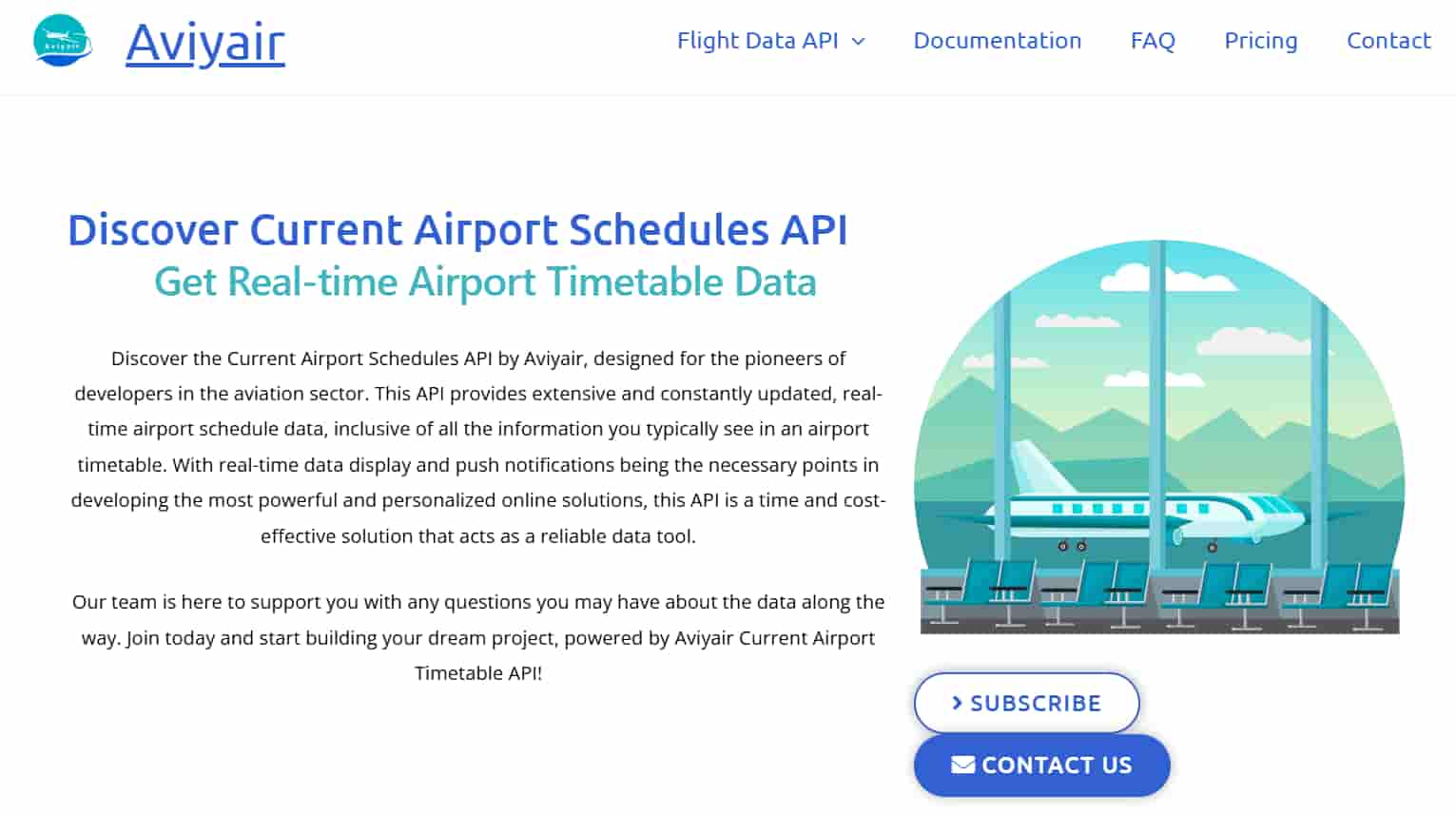
2. Aviyair

Aviyair

Aviyair’s Current Airport Schedules API provides real-time access to live airport timetable data. With just two required fields. The airport IATA code and schedule type (arrival or departure). You can pull live schedule updates directly into your application or system.

The API supports over 20 optional filters to narrow results, including airline, terminal, gate, status, flight number, delay duration, and more. It returns all key timetable data like scheduled, estimated and actual times, terminal/gate info, airport IATA/ICAO codes, airline identifiers, flight status, and codeshare details when available.

Developers can also combine this with Aviyair’s future schedules API to enrich responses with common aircraft model data per flight number. The JSON REST structure is designed to work across modern languages, including JavaScript, Python, PHP, and others.

Pricing:

  • Starter: $129/month (25K calls)
  • Standard: $269/month (90K calls)
  • Business: $729/month (470K calls)
  • Custom/Unlimited: Contact for pricing

Pros:

  • Full aviation API suite (7 types)
  • Global coverage and real-time data
  • Supports multiple programming languages

Cons:

  • High starting cost
  • No free trial or public test tier

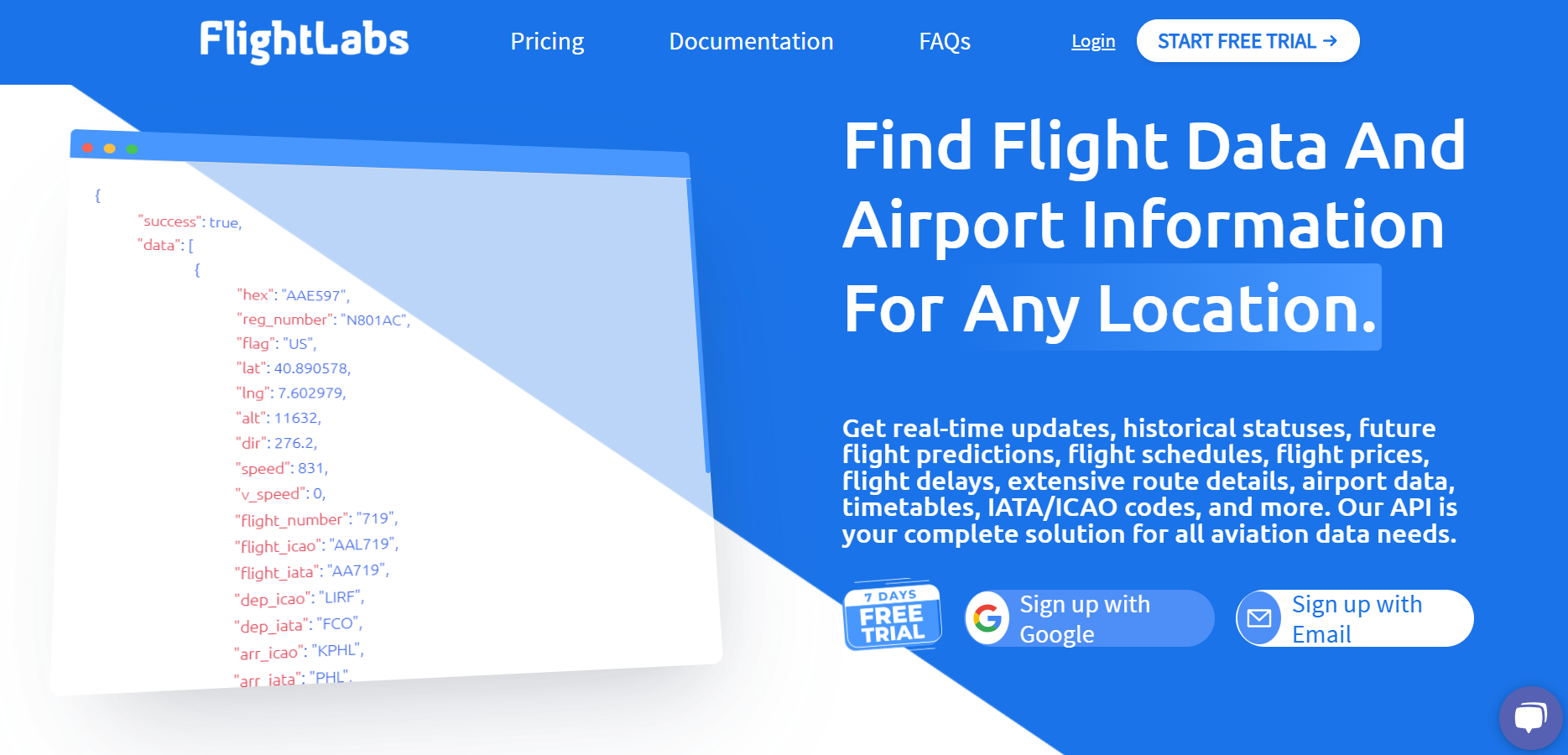
3. GoFlightLabs

GoFlightLabs

GoFlightLabs provides an airport schedule API that returns real-time departure and arrival data based on the airport’s IATA code. You can set the schedule type as either departure or arrival, and add filters like airline, flight number, or timestamps to narrow things down.

Each response includes the essentials such as flight number, airline codes, terminals, gates, scheduled times, and current status. You also get timestamps for estimated and actual events, delay durations, and aircraft ICAO codes. Baggage carousel info and codeshare identifiers show up when available.

The API is delivered in JSON format and includes both local and UTC timestamps for time-based tracking.

Pricing:

  • Starter: $24.99/month (4K calls)
  • Basic: $49.99/month (10K calls)
  • Pro: $149.99/month (100K calls)
  • Premium: $249.99/month (500K calls)
  • Free trial: 7 days or 50 requests

Pros:

  • Affordable entry-level plans
  • Includes historical and future flight data
  • Frequent API improvements

Cons:

  • Reports of billing and cancellation issues
  • Strict rate limits and limited support hours

4. SITA

SITA Flight Schedule API

SITA offers a Flight Schedule API built for global aviation data needs, providing access to scheduled flights between airports, including future flight details. The API is designed to work with both city and airport codes (IATA), making it flexible for a variety of schedule-based applications.

The output typically includes flight numbers, airline details, departure and arrival airports, scheduled times, and frequency of service. It’s suitable for displaying available flight connections, planning logistics, or integrating schedule insights into aviation platforms.

This API focuses on scheduled data rather than real-time updates. It is an ideal API when you’re building around published timetables rather than tracking live statuses.

Pricing:

  • Enterprise-only; contact SITA for quote

Pros:

  • Enterprise-grade reliability and uptime
  • Detailed metadata (gates, terminals, aircraft info)
  • Used by major airlines and airports

Cons:

  • No public pricing, enterprise-focused
  • Complex authentication (OAuth2)

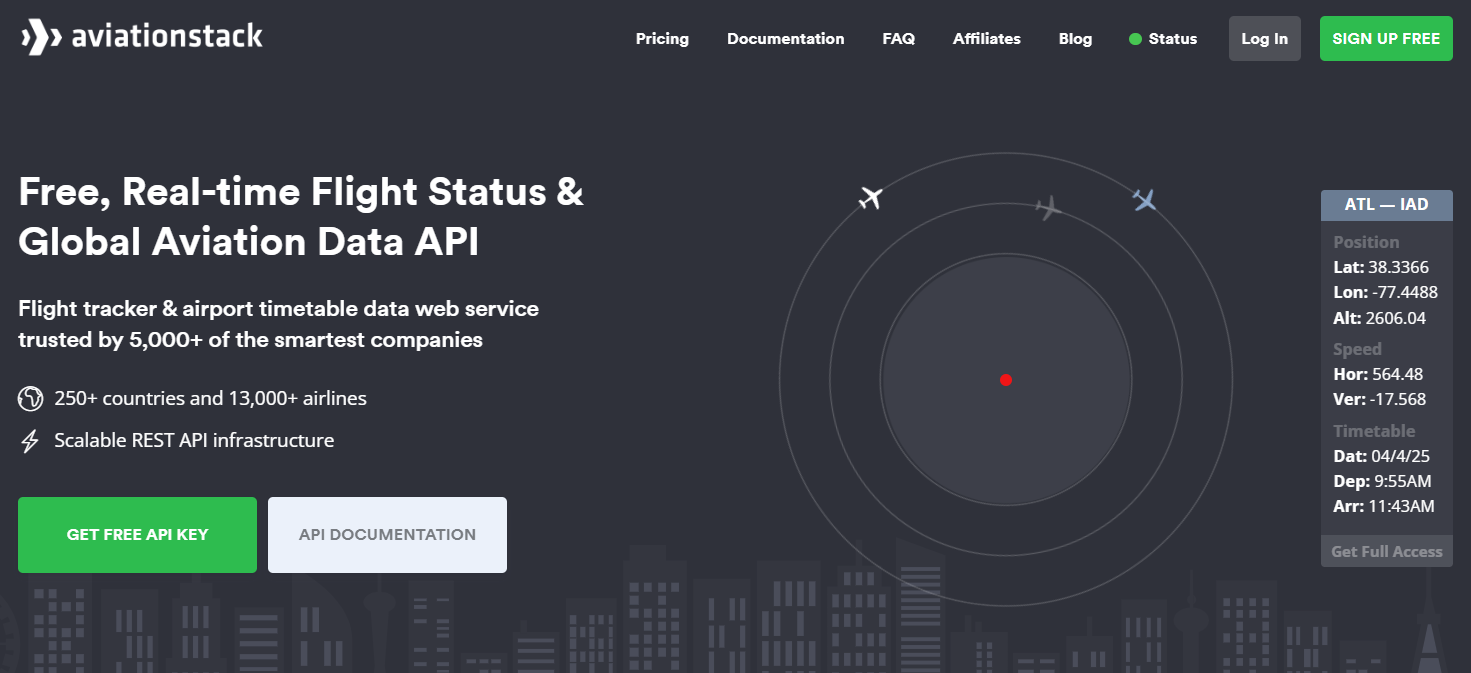
5. AviationStack

Aviation Stack

AviationStack provides a flight data API that includes both real-time and historical schedule information. With support for global airports and airlines, the API lets you pull live departure and arrival data using airport IATA codes, along with key details for each flight.

Each response includes flight number, airline info, status (like active, delayed, cancelled), scheduled and estimated times, terminals and gates (when available), as well as airport codes for both origin and destination. Aircraft type data and timestamps in both local and UTC formats are also included.
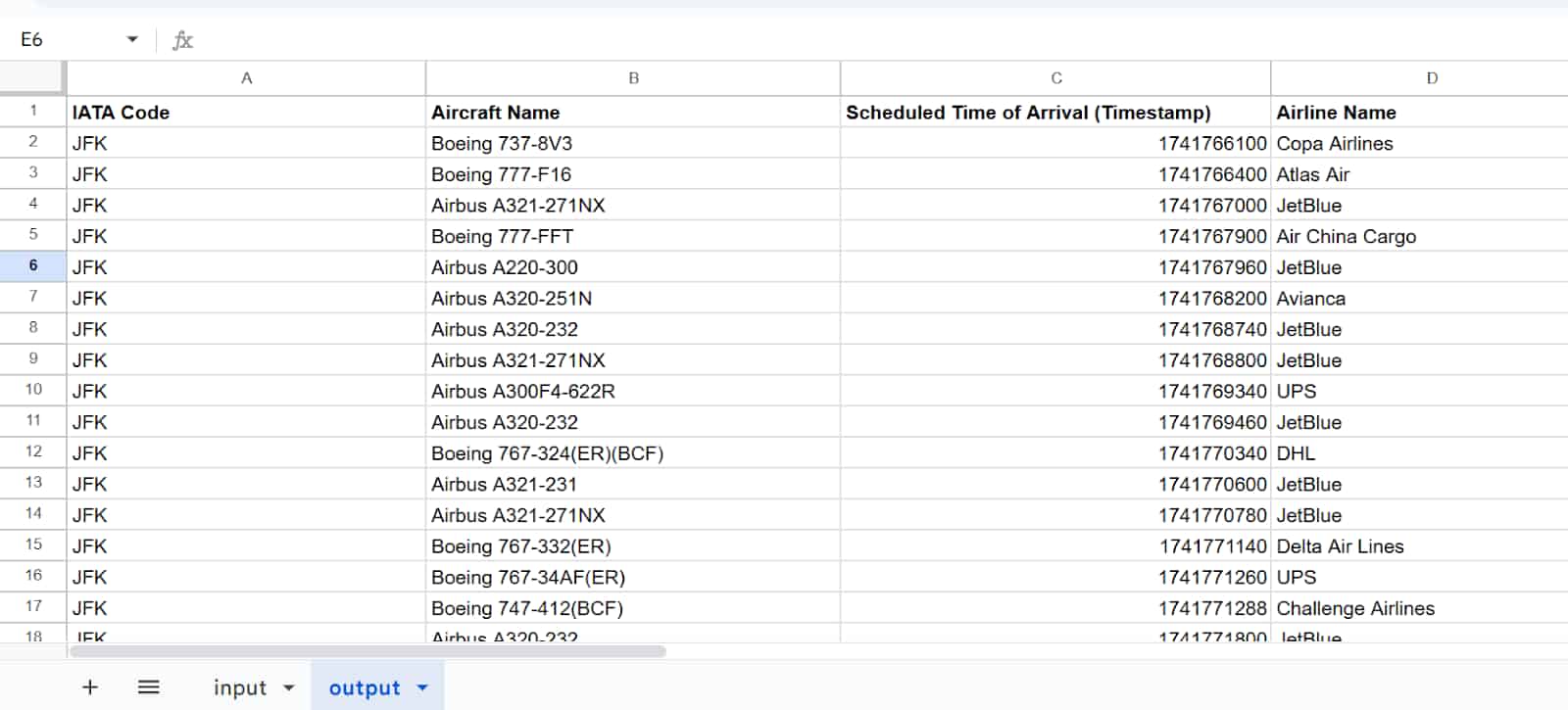
You can query by airport, airline, flight number, or date which makes it flexible enough for tracking schedules or building real-time flight boards.

Pricing:

  • Free: 100 calls/month
  • Basic: $49.99/month (10K calls)
  • Pro: $99.99/month (100K calls)
  • Business: $249.99/month (250K calls)

Pros:

  • Free tier available
  • Global coverage with real-time updates
  • Simple and quick setup

Cons:

  • Rate limits even on paid plans
  • Customer support and data accuracy issues

Conclusion:

Airport schedule APIs vary in how much data they offer and how easy they are to work with. 

Whether you need real-time departures, future schedules, or historical records, the right tool depends on your use case. The five listed here cover a solid range of features, formats, and filtering options.

Explore the docs, test a few endpoints, and choose the one that fits your workflow best.

Additional Resources:

Related Blogs

Read more articles to stay informed and explore related topics.